The primary goal of this course to introduce UW students to India’s environmental policies pertaining to conservation and development. Through lectures, discussions and individual research, students will gain insights about how these policies were developed, put in place, and their outcomes.

This blog site highlights student accomplishments and travel experiences to India.


Saturday, May 9, 2020

False Promises: How One Company Drastically Failed Indian Farmers

By: Gabriella Dodgson
May 2020 - Reflections on Bt cotton

    The news is often filled with new innovation pertaining to sustainable agriculture. The one that we tend to hear the most is genetically modified organisms or more commonly known as GMO’s. “Genetically modified cotton is currently grown on 25 million hectares around the world [1]”.  This cash crop is especially important to India as they are the largest producer of cotton in the world. BT cotton was promised as a miracle solution to reduce pesticide use and allow farmers to increase their cotton yield.

Pink bollworms in a cotton boll (Source: US Dept. of Agriculture)
     The first approval for cotton cultivation of BT hybrids was given in 2002. BT cotton was created by a company known as Monsanto, and few promises the company made to Indian farmers have come true.  Monsanto made two main promises to India farmers about this strain of cotton; first that it would reduce the amount of pesticides farmers need to buy to control pests, second it would increase yield and thus income. This paper will discuss how the Monsanto company fell short of these promises and greatly affected many farmers lives.

    Currently, Bt cotton is being infested by the pink bollworm that has grown resistant to the bollgard-2 genetic trait, Monsanto promised this gene would protect the crop. “The resulting hybrids are hemizygous, which means they only express one copy of the Bt gene. This means that some seeds are toxic to the pink bollworm and some are not [2]”.  This is significant because the Bt seeds initially cost more money for the farmers and now are creating havoc on their farms as the pink bollworm infests the cotton. The Indian Government is now considering cutting the royalties to Monsanto as thousands of farms suffer the consequences of their actions. This is why it is important to thoroughly study the effectiveness of genetically modified organisms before mass producing them in order to make a profit. It is important that agricultural sectors create regulations that prevent farmers from suffering and declaring bankruptcy due to poor science such as we see with Bt cotton.

    Monsanto also promised farmers that Bt cotton would increase the annual yield of cotton. “After the introduction of Bt cotton, the yield almost doubled within six years. However, the decline in yield is only about 15 percent in the last six or seven years. Therefore, Bt cotton still outperforms conventional varieties [3]”.  This is significant because Monsanto did promise an increased yield, and this did occur in India. However, an economic analysis would need to be done to see if the increase yield outweighs the extra costs spent on the Bt cotton seeds and pesticide use. It seems that there is no easy answer when it comes to the use of Bt cotton. It can also be argued that the improvements in yield may have been due to improvements in infrastructure and agricultural practices within India.

Cotton fibers awaiting processing in a factory near Coimbatore, India (Photo: R. Sivanpillai)

    It can be argued that in some ways Bt cotton was successful. Interestingly, Bt cotton had success in some regions of India. Many states in recent years have reached record average yields. Farmers may have also lacked information on growing conditions, pesticide use, the importance of planting proper seeds and the earning to be expected from the plant. The lack of agricultural education could also play a part in the success of the cotton. Thus, more research will need to be conducted to understand the role agricultural education plays in sustainable cotton cultivation.

    Currently, over 90% of all the cotton grown in India is Bt cotton.  The intense use of Bt cotton has provided many problems for Indian farmers and these will continue to grow unless an affordable option is found. As an essential part of Indian economy, it is important that the government creates regulations preventing companies from false advertising of their products. Bt cotton has become a huge economic threat for India and farmers livelihoods, it is time that the government come to the aid of those affected by Monsanto.

Sources:

[1] “Genetically Modified Cotton.” Genetically Modified Cotton. Ontario, Canada : Canadian Biotechnology Action Network , 2013. www.cban.ca/cotton.

[2] “Indian Farmers Double Yields with Bt Cotton, but Pest Resistance Issues Complicate Its Advantages.” Genetic Literacy Project, August 6, 2018. https://geneticliteracyproject.org/2018/08/06/indian-farmers-double-yields-with-bt-cotton-but-pest-resistance-issues-complicate-its-advantages/.

[3] Pulla, Priyanka. “A Perfect Storm in the Cotton Field.” The Hindu. The Hindu, March 28, 2018. https://www.thehindu.com/opinion/op-ed/a-perfect-storm-in-the-cotton-field/article23357894.ece.

Friday, May 8, 2020

Perspectives on Bt cotton in India

By: Chelsea Warren
April 2020 - Reflections on Bt cotton


Genetically modified Bt cotton seeds were first introduced to India by Monsanto, a United States agrochemical company, in 1993 through an Indian seed company, MAHYCO. It was not until 1998, when Monsanto and MAHYCO formed a joint-venture called MAHYCO-Monsanto Biotech that Bt cotton seeds started gaining popularity with Indian farmers. The seeds were advertised as something of a “cure-all” crop, expensive, but guaranteed to resist pests, decrease pesticide usage, and increase yields for struggling farmers all over India. Soon after Bt cotton took off, India did indeed see a dramatic increase in national average cotton yields, but in the years to follow there has been a great deal of controversy over whether Monsanto truly delivered on their promises to farmers.

There are many different perspectives on this issue, often with some organization or entity behind them, responsible for propagating their story. Some, portray the arrival and continued use of Bt cotton as a crisis for Indian farmers, brought on by immoral corporations and perpetuated by a negligent government. Others site the increased yields and reduced pesticide usage in some areas and claim Bt cotton as a great success. The farmers themselves also seem to be split on the issue.

Separating cotton seeds from fiber in Coimbatore, India (photo: R. Sivanpillai)
However, I think farmer opinion is of utmost importance here. It is their families and livelihoods at stake – factors which have been largely ignored by giant greedy corporations like Monsanto and their Indian business partners as well as the Indian government.

Since farmer opinion was my main focus, I tried to find real testimonials or interviews from farmers or families affected by Bt cotton. Most, if not all, of the “positive” content I found in support of Bt cotton or genetically modified seeds in general, were sponsored by an organization or corporation. The 2015 video titled, Understand Bt Cotton and Its Impact on the Sector, was produced by MAHYCO (Maharashtra Hybrid Seed Co.). Of course, this video presented a long list of benefits supposedly produced by Bt cotton. One of the first videos that appears when researching Bt cotton is a testimonial by a farmer in Sirsa, India, who talks a lot about the environmental benefits of Bt. The original video was created by the Cornell Alliance for Science who, as an organization, advocate the continued production and consumption of GMO’s and argue publicly against anti-GMO campaigns in India.

A well-known environmental activist, Vendana Shiva, is one of the biggest voices, along with her organization, Navdanya, against the use of GMO seeds in Indian farming. She encourages the cultivation of native seeds as a means of securing biodiversity and sustainability and many people, especially Indian women, are behind her movement. It is important to note that media played a huge role in convincing (or scamming) Indian farmers into buying genetically modified seeds in the first place. There were numerous advertisements made for Bt cotton, when it was being introduced, that promised prosperity.

So, who is telling the truth? In my opinion, Bt cotton seeds themselves are not to blame for the plight of the Indian farmer. Bt cotton seeds have proven to be effectively resistant against the pink bollworm, one of the main problem pests for Indian cotton crops. However, the most important component of this agricultural system, the farmer, was largely ignored by corporation and government. It is undeniable that farmers were not given enough information to guide their purchasing and cultivation of Bt cotton. Corporations like Monsanto do not have a moral compass by which they regulate their actions, especially not in countries where they are used to getting away with anything. This leaves the responsibility of educating and protecting cotton producers, who are in many cases uneducated, to the government. Farmers should have been told that the already expensive Bt seeds would have to be repurchased each year, that they would still have to use irrigation and pesticides for good yields, and that taking loans from private money lenders results in an inescapable mountain of debt. The Indian government had to know that the desperate financial circumstances farmers were already facing before the arrival of Bt cotton would drive them to try almost anything that promised results – in many cases without resources to understand the risks. They should have stepped in to protect their farming communities from corporate predation.

Thursday, May 7, 2020

A Maharashtra Vacation

By: Thomas Gare
May 2020 - Fictional narrative reflection on Bt Cotton

Part I
     In May of 2004, my family and I decided to vacation in India to experience the culture of a different country. Additionally, my mother had always wanted to visit Koyna Wildlife Sanctuary, in Maharashtra (Central India) to photograph the Indian bison and elusive sloth bears. We read in a travel magazine that spring is a good time to see the animals lingering near bodies of water [1].

     Our flight from San Francisco to Singapore took 16 hours. We then boarded a 5-hour connecting flight to Chhatrapati Shivaji International Airport in Mumbai. Our final destination was a luxury hotel in Satara, approximately 50 miles east of Koyna Wildlife Sanctuary and 150 miles south of the Mumbai. A bus service shuttled my family and I to the hotel. We planned to spend one night at the hotel before renting a car and driving to the sanctuary.

    Driving through the countryside was a pleasant experience. We watched the local cotton farmers sow cotton seeds in their fields in anticipation of the coming harvest season. The driver of the bus informed us that the farmers were eager to plant their seeds. Two years prior, in 2002, they purchased a new type of seed called ‘Bt cotton’ from the US-based Monsanto. Although the seeds were expensive, the 2002 harvest was successful, and the farmers were hoping for similar successful years.

     The bus driver repeated what he had heard
Cotton plant (Source: US Department of Agriculture)
from a Monsanto salesman. He told us that the high upfront cost of the seeds should be offset by a reduced demand for chemical pesticides and reduced losses from bollworm infestation. We watched out the window of the vehicle as the farmers sowed their new seed. They looked happy, and the local villages were bustling with people and street vendors. Everything seemed right with the world.

    Arriving at the hotel in Satara, we were served a dinner of roti, dal, and a mixed green salad. The staff shared some tips regarding local tourist attractions and popular areas to view bears and bison within the sanctuary. We thanked the staff for their advice and went to bed, eagerly anticipating the activities of the following day.

    The next morning, we rented a car and drove two and a half hours west to Koyna Wildlife Sanctuary. Our new hotel was located near the boundary of the sanctuary. After checking in, we purchased a map of the area and hopped back in the car. We made sure to mark the locations which were recommended by the hotel staff the night before. There was not enough time to search for wildlife before dark, so we simply made a plan for the next day’s adventures and returned to the hotel.

     Upon our return the next day, our primary goal was to locate a herd of Indian bison or a lone sloth bear. We eventually found our way back to a large watering hole and waited in the distance for one to appear.

    After eight hours of waiting, seeing nothing but mosquitos and other tourists, we decided to call it a day. As we started to turn the car around and drive back, we began to hear the sound of clicking camera shutters. The other tourists were all facing the same direction, towards one stand of trees about 50 yards away. We stopped the car and walked over to the other people. As we rounded a bend in the road, we instantly spotted the animals. Three adult bison and two calves were emerging from a tree line and slowly walking towards the water. My family and I stood in awe of the magnificent creatures. For the next hour, we watched the animals drink from the watering hole and graze the surrounding grass. In that moment, we decided to return to the park in the future to relive this amazing experience.


Part II
    Ten years later, in 2014, we returned to India for a second visit. Our first vacation to Maharashtra was so enjoyable that we deemed it worthy of a return trip. In planning our activities, we booked the same hotel in Satara and planned to search for sloth bears and Indian bison in Koyna Wildlife Sanctuary once again.  This time, however, was very different.

    Our flight took us from San Francisco to Singapore. After waiting three hours for our connecting flight, we boarded the plane to Mumbai. Although this would be our second visit to India, we were just as excited to experience the food, culture and scenery as the first trip.

    Landing at Chhatrapati Shivaji International Airport, everything seemed normal. The same bus service picked us up outside the airport to drive us to Satara. Although the driver was different, he drove the same route.

    Driving through the Maharashtra countryside 10 years after our first visit, my family and I were shocked. The villages and people, once happy and energetic, now appeared to lack them. The atmosphere felt nothing like our first visit. Cotton farms which were once green and well-maintained were now shriveled and dry, with some appearing abandoned. Farmers moved more slowly, as if they felt their efforts were futile.

    After the bus dropped us off at the hotel, I walked back to the nearest farming village. Luckily, one of the older village children spoke broken English and I was able to ask her why the surrounding cotton fields were in such poor condition. Through a thick accent, she told me all about the recent decline of her family’s cotton plantation.

    The young girl told me that her father committed suicide in 2010. After receiving a loan to purchase a new type of cotton seed, he realized that he may never be able to repay his debt. The new seeds, called Bt cotton, were successful during their first two years of use; however, they soon began to fail. Pesticide use initially declined as the plants deterred bollworm infestation. But in the absence of bollworms, new pests took over. Farmers were required to purchase new types of pesticides for their crops, thus increasing their pre-existing debt.

    Additionally, the young girl’s father did not speak the language printed on the seed packages. He did not realize that the seeds lose vigor after only a few generations and then require new seeds to be purchased [2]. If he had known this, he would never have purchased the seeds in the first place.
To make matters worse, the farmer attempted to remove the Bt cotton plants and reintroduce the native variety. Unfortunately, however, the Bt cotton plants released toxins into the soil which prohibited other plants from growing [3]. It was at this point that the girl’s father took his own life. Other farmers in the village did the same. She told me that her mother has been struggling ever since.
My family and I were heartbroken by the news. We also felt saddened by the needlessness of the situation. Had Indian farmers not been scammed, the community may still be intact. If not for Monsanto, the girl’s father may still be alive.

Sources:

[1] “Complete Guide to Koyna Wildlife Sanctuary, Maharashtra.” Trans India Travels, Trans India Travels, 28 May 2018, www.transindiatravels.com/maharashtra/koyna-wildlife-sanctuary/.
 

[2] Ware, Daxton. Biotechnology and Insect Pest Management. ED-Tech Press, 2019. Indian Agricultural Research Institute.
 

[3] Yasin, Sanaullah, et al. “Impact of Bt-Cotton on Soil Microbiological and Biochemical Attributes.” Plant Production Science, vol. 19, no. 4, 2 June 2016, pp. 458–467.

Wednesday, April 22, 2020

The Bhopal Gas Tragedy: Past, Present, Future

By: Gabriella Dodgson
April 2020 - Reflections on Bhopal Gas Tragedy

As the Corona virus slowly begins to dismantle everything around us, it becomes more apparent how important public health is to the entire world. Viruses and environmental disasters of anthropogenic or natural origin are closely linked in the affects that they can have on communities and economies globally. The Bhopal Gas Tragedy on December 3, 1984 is still  remembered as  one of the worst industrial accidents in history. The poor management of the large industrial plant in the state of Madhya Pradesh, India led to the accidental release of over 40 tons of methyl isocyanate gas causing thousands of morbidities.

Bhopal Gas Tragedy
Background information
NBC News Report (1984)
The Economist's Review (2014)
The effects of the disaster can still be seen today nearly 36 years later, thus showing how important regulations are in protecting the health of communities near and beyond industrial sites. The Bhopal Gas Tragedy occurred due to three main problems within the plant; poor management practices due to neglect, failure of multiple safety mechanisms and failure to alert proper authorities to protect public health. It is my hope that as we face public health crises with the current Corona virus, we learn from events such as the Bhopal Gas tragedy.

Initially discussions of the incident focused on the failure of several safety mechanisms within the plant. After further research, there were actually several reasons that the plant released the toxic methyl isocyanate.  The main problems with the plant noted included the introduction of water that created the catastrophic chemical reaction and the failure of the flare to burn off escaping gases. According to the New York Times, one of the main causes of the accident was, “A workers whose training did not meet the plant’s original standards was ordered by a novice supervisor to wash out a pipe that had not been properly sealed. This procedure was prohibited by plant rules [1]". This shows how poor the management at the Union Carbide plant was, I think this is significant in understanding how severe accidents can occur and how  strict standards must be put in place when working with harmful chemicals that can severely affect people’s lives. It should be noted that the neglectful management was in large part due to the company planning to sell the plant and thus not investing in proper training. The poor training of these managers shows that the Union Carbide Corporation was negligent in providing proper training and resources for those who worked at the plant.

The Bhopal Gas Tragedy was a devastating public health event. “Estimates of the number of people killed in the first few days by the plume from the UCC plant run as high as 10,000, with 15,000 to 20,000 premature deaths reportedly occurring the subsequent 2 decades (Broughton 2005).” The current data also likely under-represents the true extent of adverse effects on public health, some individuals left Bhopal almost immediately following the accident and were lost to follow-up with. “At the end of October 2003, according to the Bhopal Gas Tragedy Relief and Rehabilitation Department, compensation was only awarded to 554,895 people for injuries received and 15,310 survivors of those killed, the average amount to families of the dead was $2,200 [2].”  It is clear that local governments should not allow industrial facilities to be in close proximity to urban areas. Industry and governments must work together to improve safety for the public in terms of industrial accidents. At the time of the incident, no emergency plan was put in place within the state. It is important that this event is seen as a warning to other states that there must be plans put in place to protect the public during emergencies.

Today the Bhopal Gas Tragedy is still affecting thousands of families. The entire population of old Bhopal is affected. “ The toxic wastes from the factory site have been piped into three huge solar evaporation ponds and these have slowly leaked into the soil and groundwater [3].”  Union Carbide constructed these ponds in 1977 and have dumped several thousand tons of toxic waste and byproducts into these sites. The wastes were separated from the soil beneath by a thin plastic barrier sheet made of polyethylene. The ponds in principle are just giant polluting holes in the ground leaching chemicals into nearby groundwater. This means that second and third generation children are being affected by the actions of the Union Carbide Corporation. As a corporation social responsibility should be an essential pillar of conducting business. The Union Carbide Corporation failed to protect the community that they worked in, ultimately this will affect these communities for many years to come.

Sources:

[1] Diamond, Stuart. “THE BHOPAL DISASTER: HOW IT HAPPENED.” The New York Times. The New York Times, January 28, 1985. Link

[2] Broughton, Edward. “The Bhopal disaster and its aftermath: a review.” Environmental health : a global access science source vol. 4,1 6. 10 May. 2005, DOI:10.1186/1476-069X-4-6. Link.

[3] “Disabled Children of Bhopal Gas Tragedy.” Pulitzer Center, July 29, 2019. Link.


Tuesday, April 21, 2020

Thoughts on the UCC’s reaction to the Bhopal Gas Tragedy

By: Nicole M. Miller
April 2020 - Reflections on Bhopal Gas Tragedy

My original thoughts after learning about the gas tragedy of Bhopal, were shameful towards the American company who placed their plant in an unfit workplace. From a realist perspective in terms of capitalism, it is understandable why they put a plant in Bhopal. Bhopal is in central India, so the location is prime. Also, it is much cheaper to employ workers in India then in the United States. However, safety precautions should never be ignored. These precautions were blatantly ignored because it was cheaper to do so. They also did not consider that in the area, the public heath infrastructure was poor and even something as simple as tap water was only available a few hours of the day [1].

The night before the accident, there was a small leak of MIC and pressure was increasing in the storage tank and the vent gas scrubber (that neutralizes toxic discharge) was turned off for three weeks. Not only that but, the refrigeration unit was also shut off, so pressure and heat continued to build up in the tank, and the gas flare safety system was also shut off for three months. After I learned about this, I understood that it was out of money saving tendencies as to why the safety precautions were shut off and ignored. According to Broughton (2005), “the facility continued to operate with safety equipment and procedures far below the standards found in its sister plant in Institute, West Virginia” [1]. This was because local workers were instructed to prepare the plant for selling (due to lack of profit), but no one would purchase it.

The reason why the safety precautions were ignored was the company was performing bad in terms of finance so they could not afford to keep them up and running. I believe that if money was the issue, they should have stopped production all together instead of continuing production and just simply ignoring safety precautions. However, the city of Bhopal had to suffer the consequences, which is simply not fair. India and the United States had business treaties in which were guaranteed but violated in Bhopal [2]. It is important to try to look at tragedies like these as warnings in order to prevent it from happening again. This event could have been a hard lesson learned for the UCC, however it appeared to me that they tried to ignore the problem rather than learn from it. They took no responsibility and they withheld information from the public. The entire process was delayed because the case went back and forth between courts of India and the United States. To this date, there is no released information on what was exactly leaked from the factory in December [1].

A section of the UCC plant (Bhopal, India) several decades after the disaster
(Source: Simone.lippi at it.wikipedia / CC BY-SA (https://creativecommons.org/licenses/by-sa/2.0)


A survivor-activist Rashida Bi summarized his opinion on the situation in Bhopal by stating, “Those who died while asleep on Dec 2, 1984, were lucky. Those who survived are dying bit by bit every day. We are being treated as if we are culprits” [2]. Overall, I believe that the UCC is to blame for this tragedy. It is a hard lesson learnt and justice has yet to be served. The path of industrialization (especially in developing countries) is a difficult path. By this I mean, businesses have to make sacrifices and learn from mistakes. This tragedy can be looked at as insight gained in terms of not letting something like this happen again.

Sources:

[1] Broughton E. (2005) “The Bhopal disaster and its aftermath: a review.” Environmental Health, 4 (6). DOI: 10.1186/1476-069X-4-6 Link

[2] Sharma, D.C. (2005) “Bhopal 20 Years On” The Lancet, 08 January 2005 Link

Wednesday, April 15, 2020

Bhopal Gas Tragedy Response: A Photographer’s View of the Tragedy

By: Alannah C Gee
April 2020 - Reflections on Bhopal Gas Tragedy

Seeing the world through a camera can distance a photographer from the pain they are capturing. In the moment, we can hide behind our industrial box, perfectly designed for capturing and sharing moments. We try to hide, try to throw ourselves into the process of creation.
Bhopal Gas Tragedy
Background information
NBC News Report (1984)
The Economist's Review (2014)
No amount of mechanical distance could allow photographers to hide from the pain of their subject on December 3rd, 1984. Tragedies often do this; overwhelming pain surrounding the camera seeps through the lens and infuses photographs with the deep sorrow felt by the people affected by them. The gas leak in Bhopal was one such pain infused tragedy and photographs resulting from the aftermath hold such deep heartfelt pain, even today.

On the morning of December 3rd, photographers arrived in the city of Bhopal India, one of the most notable being Raghu Rai, ready to walk among the people whose lungs had accumulated pieces of the massive, around 40 ton, cloud of toxic gases released from a neglected, unsafe pesticide plant the night before [1]. What these photographers witnessed and captured gave a visual face to the harsh neglect of the large industrial company responsible for the leak, Union Carbide. These photographs are hard to even look at and must have been much harder to take as they capture scenes of children being buried and husbands carrying their dead wives across the now desolate city [2]. They also captured victims of the tragedy, suffering from injuries like blindness. One powerful image taken by Rai shows the Union Carbide plant surrounded by lingering gas and shows the proximity of the lower caste housing whose residents were all greatly affected by this gas leak. The photographs by Rai go on to chronicle the processes of cremation and later entire bags full of skulls [2]. He shows just a piece of the immensity of this tragedy but yet is able to so directly capture the gut-wrenching pain in fixed images.

Source: https://bit.ly/2FUiaOv

It is hard to imagine what being a photographer in this tragedy would have been like, but I imagine it would have been strikingly similar to ones capturing other historical tragedies enshrouded in human based pain, like 911 or various wars. Rai’s photographs give me a strikingly similar feel as the ones taken in the Vietnam War of children running naked away from napalm bombs [3]. The intentionality of these situations is vastly different, but both involve helpless citizens running from pain that is descending from the sky, running from poison threatening to fill their lungs and bring them to their knees or even their graves.

Walking through the streets of the areas around this plant in the days after the tragedy must have been difficult. Being surrounded by confused, uninformed, dying people with no resources to cope and then looking up at a massive industrial plant that existed in this town simply to take advantage of the developing economy and cheap labor must have been sickening. Learning that this happened because the company essentially gave up on the plant and stopped caring about safety measures must have felt like they had given up on the people surrounding it too. If it is still so infuriating to consider the predatory negligence of Union Carbide, it must have been completely depressing walking the streets among the victims in pain knowing how they had been hurt by greedy industry. And then picking up a camera and fixing these images in time must have been impossible. Struggling to capture the truth and authenticity of the pain, struggling to give the unheard victims a voice, these photographers were doing important work. It is easy to look at the statistics of a tragedy and understand the lack of appropriate monetary reparations after the tragedy but without looking at the faces of the people affected, it is impossible to understand the core of the pain. It is impossible to feel the deep cut to the community without hearing the victim's stories and hearing what they have to say. Photography has become an incredible tool for these stories to become widely shared and allow the emotion to be conveyed to all. It also becomes a visual historical record so that now, 32 years after the tragedy, people like me can go back and look at these photographs and understand another small sliver of the drastic effects on the community that this industrial negligence had.

Sources:

[1] The Editors of Encyclopaedia Britannica. “Bhopal Disaster.” Encyclopædia Britannica, Encyclopædia Britannica, Inc., 10 Jan. 2020. Link

[2] BHOPAL. Raghu Rai Foundation, Szuveren Media, 22 Mar. 2019. Link

[3] Stockton, Richard. “The Widely Misunderstood Story Behind The Iconic Image Of ‘Napalm Girl.’” All That's Interesting, All That's Interesting, 23 Sept. 2019. Link

Friday, November 22, 2019

India: A Spritual Odyssey

By: Dylan Sollenberger
July 2019 Trip to Coimbatore, India


At a Hindu temple near my hometown of Peoria, Illinois, I once asked a man who spent half his life in India and half in the United States, what the difference was between people from both areas. With a big smile on his face, he explained to me that the difference between people is like an onion. Sounds odd, but like the layers of an onion, superficial differences can be peeled away till there is nothing there. No real difference at all. I understood what the man was saying but until my travels to Coimbatore, India I couldn’t capture the full scope of his wisdom.

Before any mention of the trip, I had always wanted to travel to India. My exploration into Eastern Philosophy had greatly intrigued me back home. Upon moving to Laramie, Wyoming to continue my education, I was curious to see how my academia and spiritual endeavors would intersect. I was elated when I found there was an Environmental Policy in India course offered in the spring. My main research project for that course focused on environmental action taken on behalf of spiritual communities near important religious sites. What began as a case study on specific environmental/religious initiatives broadened into an overall study in the relationship between spirituality and biological conservation. When my teacher asked if I would like to travel to India to further explore this theme as part of an elective course I couldn’t refuse. What seemed to be separate roads of academic pursuit and spiritual journey were now appearing to be as one.

After landing in New Delhi International Airport with fellow
student Emma Dixon and Ramesh Sivanpillai (Instructor)
After never thinking I would get out of a plane seat or an airport, I finally arrived in Coimbatore, India. I must admit, it was a lot to take in at first. I had never traveled outside of the United States. I’ve barely ever flown before. Now I’m trying to buy food that I can’t pronounce with money I’ve never seen. Not to mention, I have a hard time understanding solely English-speaking people. Let alone a country where there are many different dialects and accents (you quickly realize the limits of only being taught one language). The traffic, oh my goodness. It seemed to be as if there were more guidelines than actual rules when it came to the road. Sort of a free-for-all, which to people from this area was completely normal. They seemed to navigate the roads almost flawlessly without any conflict. Before getting overwhelmed, I reminded myself of what the man back home said. “Superficial differences”.

Once we got to Amrita University where we were staying, I remember having the overwhelming feeling that I made the right decision coming on this trip. The University was basically located in the middle of the jungle next to these beautiful mountains. It was as if the buildings were part of the nature there, like the grass and the trees. In many highly developed areas you get a feeling of the development choking out nature, but here it all seemed to be perfectly integrated. Walking around campus didn’t feel like a stressed time crunch to get to class, but rather a meditative walk through the forest. Which is another thing. Almost everyone here seemed to walk at a much more relaxed state. I remember on one of my early walks with a good friend I made by the name of Shashank, having to constantly remind myself to slow down. The plants and abundant wildlife on campus really seemed to facilitate this idea of soaking in the little things while going about your daily life. I had yet to meet my spiritual teachers who along with Shashank and a few other amazing students, would be the strongest aid to my research; but I was already beginning to understand the links between spirituality and nature.

Combining conservation and spirituality: Temple under trees
Something I was not aware of before coming on the trip, was just how grounded in spirituality Amrita University truly is. I knew it would be tied to Eastern Philosophy, especially Hinduism, but not on the level I discovered. Founded by the renown spiritual leader, Amma (Mother), Amrita University focuses on blending tradition and materialism. Amma, who I’ve come to appreciate on a monumental scale, believes that the University is like a tree that should be rooted in spirituality and branched in materialism. Instead of thinking of the two as separate, think of them as one that must rely on the other for wholesome survival. She also has the quote that is on all the buses at Amrita University saying, “Love is my Religion”. If there is any way I could explain the power of Amma this quote would be it. Her presence and words have the ability to offer spiritual sanctity to many across the world, and I was beginning to understand why.

An evening stroll
Another vital spiritual leader that helped with my research was a man whom I called Swamiji. Swamiji is Sanskrit for “he who is one with his self” and is usually termed for an ascetic or yogi who has been initiated into a religious monastic order. He oversaw the spiritual practices and offered spiritual advice to students on campus.

Upon meeting him, I was immediately taken back by his kindness and wisdom. He was the one who really laid the framework for the connections into spirituality and conservation that I was exploring here at Coimbatore. He would explain concepts to me that would range from the universal core of all religions to the art of meditation. He was able to elaborate on Eastern concepts that I briefly learned in Illinois but didn’t fully understand. He strongly believed that the core of all religions remains the same, and that there are only superficial differences that give off the false perception of difference. The man and his onion story from back home was now ever so clear.

Whether spending my days studying the different plant and animal species near campus or learning from spiritual gurus who taught insight into the appreciation of these lifeforms, my research was coming along great. I was really starting to understand how having a certain view spiritually can affect how you treat other living organisms and subsequently acts of biological conservation. I was also receiving enormous help from many students on campus, whom I now considered good friends. Which is another important thing to note. I don’t think I met one rude person during my stay in Coimbatore! It was my birthday on one of the last days and the students even threw me a surprise birthday party!
Surprise (Happy) birthday party hosted by Amrita's Center for Computational & Engineering Network (CEN) students
All the different help I received, the man who probably helped me the most was Bill. Bill is an interesting fellow who was introduced to me by Swamiji. He is from California and although he isn’t originally from the Coimbatore area, he understood the mysteries of the universe better than anyone I met. I won’t get too much into Bill as I believe he would prefer the ambiguity as well as I’ve already rambled on too long for this blog (I could talk about India forever). Let’s just say he was a true guru to me during my stay and the spiritual knowledge I gained from him could never be put into words. He helped me find who I was, which in turn had the most substantial effect on my research. I was now looking at this new and different place I was in but no longer seeing a difference. The traffic, buildings, animals, languages, people, all which seemed like crazy differences, were now like the superficial layers of the onion and not actually real to me. Just like the previous perception of myself, which allowed superficial differences to dictate that I was something different than everything around me, I could now understand the concept of universal oneness. The main concept my research was now based upon. Without my trip to India none of this could have happened. I would never have had the opportunity to do research on such an important subject and my own personal spiritual would never had been jump started in such a way that continues to push me today.

Wednesday, September 25, 2019

Living on Indian Time: Coimbatore, India

By: Emma Dixon
July 2019 Trip to Coimbatore, India

Two weeks is a short time to try and immerse yourself into a new culture. This was the challenge I had coming to Coimbatore.


We stayed at the Coimbatore Campus of Amrita University, where I had the opportunity to meet faculty and befriend several graduate students. The campus was nestled between lush mountains and had some of the most beautiful, manicured gardens I had ever seen. Wandering the expansive grounds or taking in the view from the guest house roof was always a good way to start or end the day.

While two weeks exploring the Amrita campus and surrounding area was not much, it proved ample time to learn several important lessons.


Lesson one: Flexibility.

We think that we are flexible in the United States but being willing to reschedule and change plans still requires having a rigid plan in the first place. The first several days, I most likely asked Ramesh what the plan for the upcoming day was several times.

While we would make a tentative working plan for the upcoming day, it was subject to change depending on variables out of our control. The feeling of not having an idea of what will happen made me uncomfortable. It went against everything I had learned in the United States.

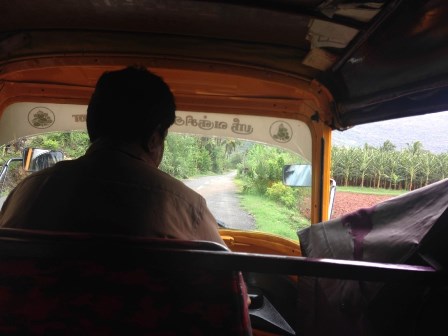
The view from the back of the first
auto rickshaw I have ever ridden in
Nonetheless, there is a lot to be said for not always having a rigid schedule. Being open to spontaneous opportunities and viewing time as a bendable concept instead of a rigid one allows you to participate in experiences you never dreamed of.

Not getting the taxi you planned on leads to an amazing trip in an autorickshaw (an open-air motorized vehicle with three wheels).

Randomly stopping to talk with a shop owner or farmer prompts an invitation to have tea or tender coconut in their home.

If I had been back in the United States, I doubt that I would have been able to say yes to all of these opportunities, or if they would have even been offered in the first place.


Roast - a dish made from a paste of rice and lenti
at one of the three Amrita University cafeterias. Delicious!
Lesson two: Hospitality

Many people in the United States would not think to invite in a stranger they have talked to for twenty minutes for tea and food, but the hospitality and kindness of many people in India run deep.

I am so grateful for the many people I met and the myriad of ways they showed little acts of kindness. Whether it be making sure I ate good food, giving me a flower or making tea, they showed that they cared.


Lesson three: Spicy vs. Hot

Puttu, a dish that consisted of rice rolled in coconut
& kdalai curry, a side dish made with beans and spices

Many of the dishes I got to try were heavy on green chili and whole black peppercorn which challenged my spice tolerance, or heat tolerance, as I should say. 

While I was there, I learned that spicy food means food rich in a variety of spices, not hot, which is the correct terminology for food that sets your mouth on fire.


Overall, I am looking forward to returning to Coimbatore sometime within the next year or two so that I can learn even more of the culture and human elephant conflict occurring there.

Thursday, August 22, 2019

Competition for Resources between Humans and Elephants: Lessons Learned from Coimbatore, India

By: Emma Dixon
July 2019 Trip to Coimbatore, India

Born and raised in Kansas, the breadbasket of the United States, where the main pests’ farmers worry about are insects, rodents and birds, I could never have imagined researching human elephant conflict.

 A coconut farm in Coimbatore, Tamil Nadu, India. It takes more than 20 years for the coconut trees to reach this height and provide consistent yield. Several trees can be damaged in during an elephant raid.

Human elephant conflict (HEC) is the competition for shared resources that is mainly a result of the fragmentation and degradation of the Asian elephant’s habitat. This can often lead to a lack of food, water and space for the elephants.

India, home to a majority of Asian elephant population, witnesses several HEC incidents annually that results in both human and elephant casualties.

An employee at the local temple describes how elephants
access the water in the tank. This footprint was left
by an elephant only few hours before we visited this temple.
The farmers in and around Coimbatore, a city in Southern India has taken the brunt of the consequences as elephants commonly raid certain crops like coconut, plantain, sorghum, maize (corn), and areca nut for food, and other cash crops trampled.

Having their crops eaten by elephants causes great economic damage to the farmers who rely on their crops to support their families.

By talking to the farmers and villagers impacted by HEC and seeing the physical barriers they have built to protect their crops and properties, my understanding of this multidimensional issue grew.

There are so many different stakeholder viewpoints, some of the farmers viewing the elephant with understanding/respect and others with fear/dislike.

Learning more of the factors that have created this problem and could lead to its solution will take time, but I know that everything I learn through this project can be used on future issues that require an interdisciplinary solution.

With the villagers who described their experiences with elephant raids.

I plan to visit this area in near future and collect more data to further my understanding of this problem.  My future research and subsequent publications will allow the scientists and policymakers working on solutions to HEC to understand the issue in greater depth.

Tuesday, August 14, 2018

Human-Elephant Conflicts: A graduate student’s experiences in India

By: A. Nicole Reed
July-August 2017 Trip to Coimbatore, India

As I stepped off the plane in Coimbatore, India, I never imagined it would change my perceptions of the world any more than it had three years ago. This would be my second time in India and I thought I knew what to expect. Everything from the food and smells to what local farmers were experiencing on their land. However, each day was a new experience filled with new information and lessons learned.

Collecting stakeholders input on human-elephant conflict
in Coimbatore, Tamil Nadu, India (August 2018)
This trip was for collecting data on people’s experiences and opinions about elephants raiding crop fields in and around Coimbatore District which will be part of my master’s thesis project. I traveled to small villages near and away from the forested areas and spoke to farmers about the conflicts they were experiencing with elephants. I visited these villages with my thesis adviser and faculty members from two colleges in Coimbatore. We interviewed about 100 farmers and other stakeholders and learned the difficulties they face to protect their crops and make a living. I also learned which mitigation efforts are more effective than others.

With students, staff and faculty at Kongunadu A&S College, Coimbatore (August 2018)
I stayed at two different colleges and met many people of different backgrounds and was fortunate to take part in a river festival with one of the college official’s families. This experience helped me better understand the culture in India and allowed me to make lasting relationships with many.


There were several opportunities for myself as well as my project to develop further, perhaps though, my biggest take away from this trip was the need for communication among professionals across disciplines as well as internationally. I was also asked to present on wildlife and land management in the United States. The exchange of information available could help us work toward solving global issues such as human-wildlife conflicts. This type of communication would allow each of us to learn from each other quickly and create better, well informed, decisions. Overall, my time spent in India was useful on several levels and allowed me to collect my data as well as learn more about the culture and history of the area. 

Saturday, April 28, 2018

Is genetically modified cotton responsible for the economic hardships faced by farmers in Central India?

William Baxter, Celia Karim, and Bryan McInerney presented their research on the genetically modified Bt cotton and its possible links to economic hardships faced by farmers in Central India. 


Protecting crops from pest infestation and diseases is one way to increase to reduce losses.  Genetically modified crops are promoted as one of the ways to increase crop yield by protecting them against pest attacks.

Bt cotton, a GM crop, was developed by introducing a toxic gene from a bacterium (Bacillus thuringiensis) into cotton plants to build resistance against the pink bollworm (Pectinophora gossypiella), a major pest of this crop.

Bt cotton was marketed in India with hopes of higher yield and lower input cost.  However, the farmers did not understand that Bt cotton was susceptible to other pests and drought, which resulted in unexpected outcome.

Their presentation focused on the introduced of Bt cotton in India and its impact on the lives of farmers in Central India.

Friday, November 10, 2017

Impact of Prosopis Juliflora on the environment

By Andrea Weber
August 2017 trip to Coimbatore, India

In Spring 2017, I began my research journey with writing a literature review from newspaper and journal articles about an invasive tree species, Prosopis juliflora, known as seema karuvelai, in Tamil Nadu, India. I was fortunate enough to have the opportunity to travel to India in Summer 2017. My trip to India was amazing and exciting, but is hard to describe in more words. We stayed in a women’s hostel at a co-ed university. The girls were amazing and caring. They made us feel right at home, and shared their research journeys with us.

P. juliflora tree with ripe seed pods growing near Sulur Lake, Coimbatore, India.
While in India, my focus was to discuss an invasive species, Prosopis juliflora with the people, to really understand the impacts it has on the wildlife and humans. After talking with people from many settings, rural, city, mountain, scholarly, I was able to gather enough information to understand this tree from the ground, from the people using it and living with it.

A woman cutting juliflora tree for domestic fuel wood.

In terms of the work we conducted, I learned that knowing people within the field you are researching is extremely important. Things are not always laid out nicely, like they are in a lab manual. If you need information about a certain species of tree that is growing in the area, it is important to gather information from people who have studied it, and people that have lived with it. I learned that it can be difficult to communicate with people who don’t speak the same language, and that sometimes questions need to be worded or approached differently.

Andrea Weber (left) and Mackensie Swift in a restaurant in Coimbatore, India
The information that I gathered from goat farmers, cow farmers, medicine men, and university scholars, were similar, in comparison to what the government newspapers were stating. Through this experience, I am much more aware of the challenges that research presents, such as working around obstacles in the field and with communication.

Saturday, April 29, 2017

Savannah Hook and Ishan Patel presented their research on Zero Liquid Discharge

Savannah Hook and Ishan Patel reviewed the impact of Zero Liquid Discharge (ZLD) Policy on the textile industries and the environment in Tirupur, India.


ZLD required bleaching and dyeing units in and around Tirupur to treat their effluents before discharing them into the environment. They presented the current water quality issues of Noyal River after ZLD was enforced in 2011.

Tuesday, August 23, 2016

Experiences of a U.S. Science Educator in Coimbatore, India

By Sarah 'Katie' Guffey 
July-August 2016 trip to Coimbatore, India

With the population in the United States rapidly changing, it’s helpful for US teachers to understand educational systems throughout the world. Traveling to India allowed me to experience their educational system first hand. Perhaps surprisingly, our schools systems have many commonalities, including the types of schools, subjects offered, and teacher training programs.

While in Coimbatore (a city in Tamil Nadu state), I was able to witness the K-12 system and observe the primary school teachers. Overall, the education system in India and the US are quite similar. Primary schools in India (kindergarten & standards 1 through 5) are equivalent to US elementary schools (grades K-5). Similar to the US public, charter, and private schools, India has various types of K-12 schools including State Government Board, Central Board of Secondary Education (CBSE), among others.

Tamil Nadu State Board schools use a card system to keep track of academic milestones. Teachers use this and supplemental materials as a curriculum guide.

There are Tamil medium schools where all subjects are taught in Tamil and English medium schools where subjects are taught in English.

The first school I visited was a Tamil medium school that was following the Tamil Nadu State Board curriculum. All students will enroll in an English language course however, but rest of the subjects were taught in Tamil.


The majority of students were from a low socioeconomic background. The teachers will have roughly 35-45 students in each class. There was no cafeteria on the school grounds so most students pack their lunch. Similar to the US, if a student’s family falls within a certain socioeconomic status, lunch is provided by the government each day.

On average, only 3 to 4 students miss school each day and it is the student and teacher’s responsibility to make up missed work and instruction. The card system allows the teacher to know exactly where the student was academically before he/she missed school.

The second teacher was from a CBSE, English medium school. All subjects were taught in English with students given the option to take an additional language (Hindu, Tamil, French, etc.). The majority of students are from a middle, socioeconomic background. Generally, teachers will have between 25-35 students in each class. This school differs from the state board school in that the students have access to computers. This allows the teacher to implement the use of a class website. In addition to the card system, students also have a textbook and a workbook. On average, 1-2 students miss class each day however, most teachers will receive notification from the parent if the child is planning to miss school. Individual instruction will be provided during the child’s physical education class to make up for missed classwork.


Visiting these classrooms and talking to teachers allowed to interact with many talented teachers and gain valuable insights that will help me to teach an ever-changing student population in the US.

Saturday, April 30, 2016

Kathie Beasley presented her research on environmental pollution associated with a major Indian festival

Kathie Beasley presented an overview of the environmental pollution associated with Vinayakar Chadturti, a Hindu festival celebrated throughout India. At the conclusion of this festival, large and small statues of this venerated deity are immersed in standing and running water bodies.


The environmental pollution left behind from this annual festival is lasting due to the lead content in paint, and other materials used for making the statutes. Her research focused on the increasing demand for these statues and the impacts of decorative lead-based paints on water quality.


Anne Nicole Reed wins second place in the 2016 Best Undergraduate Research Projects award

Anne 'Nicole' Reed won second place in the Best Undergraduate Research Project award in 2016 Wyoming Undergraduate Day for her human-elephant conflict research in India. UW's chapter of Phi Beta Kappa (PBK) selected three student presentations to honor excellence in UW undergraduate Research. Nicole shared second place with another student Roslyn Fleming (English Honors Program).

Nicole presented her research findings and insights she gained from the field trip to India. After completing the literature-based research in spring 2015 on human-elephant conflict, she traveled to India in summer 2015 with Alanna Elder (BS Agroecology & ENR) to gain first-hand information about this problem, and how people and elephants are tolerating each other.

These prizes, according to Dr. Rachel Watson, were offered to research presentations that showcased the "interfaces between science and the human condition addressed in a nuanced way that shows understanding and not simply consideration".

Dr. Watson and a panel of judges reviewed 270 abstracts and selected 9 semi-finalists. Judges attended each of these 9 presentations and selected three winners. Nicole received this award at the banquet on April 30, 2016.

Wednesday, October 14, 2015

Human-elephant conflict: an experience with stakeholders in Southern India

Alanna Elder
August 2015 trip to Coimbatore, India


During the spring of 2015, I took the Environmental Policy, Conservation and Development in India. The class provided a snapshot of environmental challenges in India, and then we chose topics for individual study. I began a literature review of human – elephant conflict and spent the next three months in Laramie getting lost in the library’s database; in the vastness of India; in a problem that puzzles land managers around the world. By the end of the semester, I had a paper that I thought was accurate and an understanding that was almost tangible because I dug for it. I doubted, however, whether everything I had read would check out on the ground. In order to confirm that what I wrote was real, I wanted to see humans, elephants, and their overlapping territories in real dimensions.

Nicole and Alanna visited a corridor frequently
used by the elephants to obtain water
Thanks to funding from the College of Agriculture’s SEND program, and the Haub School for Environment and Natural Resource’s Research and Creative Activities grant, I was able to do just that.

I traveled to Coimbatore, India in August 2015 with Dr. Sivanpillai, ENR professor Courtney Carlson, and Nicole Reed, a classmate who had researched crop raiding by elephants.

There we met two faculty members from Kongunadu Arts and Sciences College, Drs. S. Raja (Zoologists) and K. Thenmozhi (Botanist). They guided us to farms and forest offices and provided insight into elephant behavior and the effects of invasive plants on elephant habitat.

Coimbatore Forest District is a hot zone for the human-elephant conflict in the state of Tamil Nadu, and includes agricultural plains as well as the rain forest reserves of the Western Ghats.

Farmers use these observation decks for monitoring elephant movement
Forest Department reports Dr. Raja had acquired showed that one range within the district had the highest rates of crop raiding, so that was where we started. Our conversations with farmers, officials and scientists sometimes echoed verbatim what we had read, or even cited articles we recognized. Still, these perspectives were fuller coming from people with a stake in the problem. The broken fences were theirs, and the trampled crops. Some had the memory of meeting an elephant, a reverence for the animal, a home to keep or a landscape to preserve.

Nearly everyone we talked to attributes the problem to habitat loss, as city borders continue to expand into forests formerly dominated by wildlife. The farmers we met made clear the choices of people living along the forest boundary, who would attempt to protect crops with trenches, fences, or night guarding. Some had switched from high-sucrose plants to curry, which elephants don’t generally touch. Others had given up farming altogether.

Inside a brick kiln in Coimbatore
A tribal woman living along an elephant corridor told us that she and her family had quit growing beans to work in a brick kiln. We could spot its tongue of smoke in the valley below her home. Thirty years ago, she had only seen elephants on occasion, and from a distance. Now, they pass her house almost daily. She said, “Where else can they go?”

Another family we visited had lost five coconut trees in two weeks. In one field, they showed us a trunk rubbed smooth by an elephant trying to uproot the tree. Nearby a tree was grounded, carved out of the kernels elephants tend to eat. The couple had electric fencing (not entirely elephant proof) around a different field, but chose to leave this one open, knowing that wildlife in the area were stressed for water. Who were they to stand in the way of survival?

Survival was an idea we heard throughout the trip, and it became increasingly hard to pin down. It is a motive, a reality, an apology – it is a force that puts every living thing in conflict with something else. According to the family, a man was harvesting dirt illegally from the land adjacent to their farm, selling soil to buy his food. Behind this field with the toppled coconuts, there was a slow-growing cavern in the scrub. The papers I read could not have shown me what survival looked like.

Monday, October 12, 2015

The human-elephant conflict that is changing India and the research that shaped our summer

Anne Nicole Reed
August 2015 trip to Coimbatore, India

This summer I had the opportunity to travel to India to learn about the human-elephant conflict. This trip was a follow up to the spring ENR policy course in which we studied policy related decisions in Southern India. After looking at many subjects Alanna Elder, Dalton Nelson, and I chose to work on the ongoing human-elephant conflict. The papers we wrote on this subject were the beginning stages of our research in India. We focused our efforts in Southern India along the Western Ghats mountain range.

This trip was an eye opening experience, I not only was fortunate enough to learn about the elephant issues in this region and what they are doing to remedy this, but I also learned about their culture which I think is a large aspect to solving any human wildlife conflicts.

In Southern India there are many conflicts that occur between the wildlife and humans, however, one of the largest that has been escalated since the 1980s is the human-elephant conflict.

Although there has continually been conflict between the two, in the 1980s began large-scale human expansion into the elephant habitat.

The crop damage or crop loss has been substantial on a local level which is the true source of frustration for the farmers. Both elephants and humans have lost their lives in this conflict.

While in India we visited with many farmers and locals to better understand the situation from this aspect but we also visited with forestry officials and scientists to also receive it from an official stand point.
Gaining a better understanding of the problem:
one perspective at-a-time. Farmers describe
how elephants destroy their crops.

By speaking with many different people it was easy to see how split people are on this subject and why it can be difficult to find long standing solutions.

While I enjoyed learning from the many people we met I believe my favorite aspect to this trip was getting to know the locals and being able to have in depth conversations with them because this adds another layer to the research that you would otherwise not have if just basing the research on literature.

I am thankful for this opportunity and plan to travel to this area again if given the opportunity.

Alanna Elder and Nicole Reed (right) observe the elephants in their feeding camp.

I believe this trip was well worth the effort and I look forward to furthering my studies with Dr. Sivanpillai through working with the Konganadu College of Arts and Science on the elephant crop destruction. This study not only has helped me on an educational level but a personal level as well.